
Defined cataract expertise
A surgeon with focused experience in cataract assessment, surgical planning and post-operative care.
Choose a cataract surgeon by more than a name. Surgical expertise, accurate biometry, IOL planning, eye-specific risk assessment, modern operating systems and dependable follow-up all matter. SGVEH brings these elements together through specialist-led cataract care in Raipur.
Cataract surgery is a precision procedure, but every eye is different. The surgeon should understand the cataract, assess the cornea and retina, review eye pressure and measurements, then plan the operation and IOL strategy around the patient’s individual needs.
A surgeon with focused experience in cataract assessment, surgical planning and post-operative care.
Measurements and imaging support IOL calculation and help identify conditions that may affect outcomes.
Technique, lens strategy and counselling should reflect cataract type, eye health and visual priorities.
Post-operative reviews help monitor healing, vision, eye pressure and any concerns after surgery.
The surgeon matters, but so does the clinical system around the surgeon. A strong cataract pathway combines expertise, diagnostics, counselling, safety and follow-up.
Look for a surgeon who routinely evaluates and manages cataract patients across different levels of complexity.
The retina, cornea, optic nerve and eye pressure should be considered before promising a visual result.
Accurate eye measurements are central to choosing an appropriate IOL power and planning refractive targets.
The surgeon should explain why phaco, SICS or another approach is appropriate for the individual cataract.
Lens options should be explained in terms of suitability, limitations and realistic expectations—not marketing alone.
Operating-theatre protocols, sterilisation, quality processes and escalation support are part of surgical quality.
Know who will review you after surgery, what symptoms require urgent contact and how complications are handled.
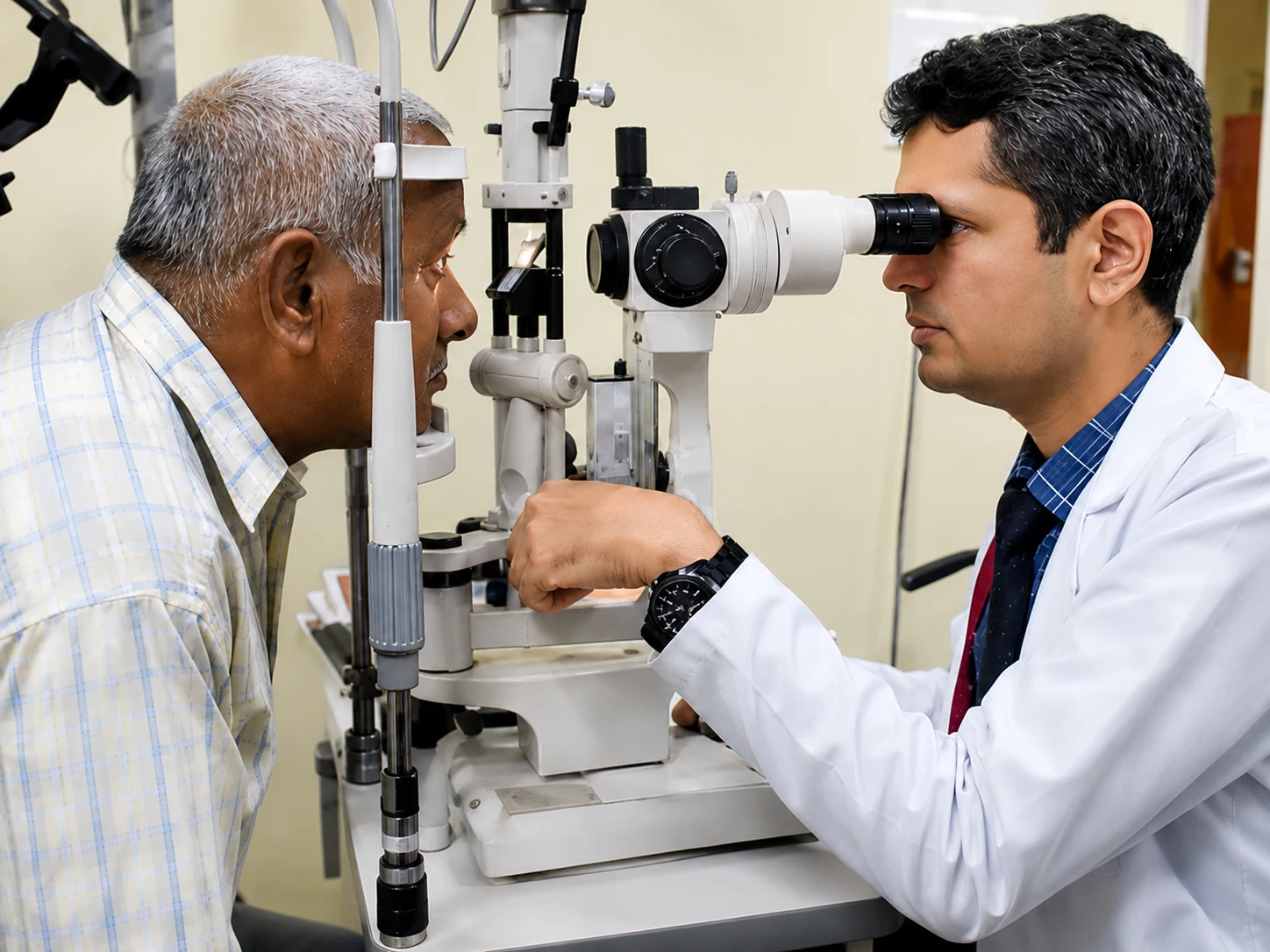
The procedure itself is only one step. Good cataract care includes diagnosis, measurements, counselling, surgical execution and recovery monitoring.
Confirm cataract and assess other causes of reduced vision.
Review biometry, corneal measurements and relevant imaging.
Plan surgical technique, IOL strategy and realistic visual goals.
Perform surgery and provide clear post-operative follow-up.
A cataract surgeon’s decision-making is strengthened by reliable diagnostics, appropriate surgical options and specialist support when the eye has additional conditions.
Small-incision cataract surgery used widely for appropriate eyes, with technique tailored to the cataract and anatomy.
Ask about phaco surgery →Manual small-incision surgery remains useful for selected cataracts where the surgeon considers it clinically appropriate.
Discuss surgical options →Precise measurements support lens-power calculation and help the surgeon plan the intended visual target.
See diagnostic planning →Monofocal, toric or other lens categories may be considered according to eye health, measurements and visual goals.
Understand lens selection →Corneal astigmatism can influence surgical planning and the suitability of selected lens strategies.
Discuss your measurements →Patients with diabetes may need retinal evaluation before surgery and coordinated follow-up afterwards.
Ask for diabetic eye evaluation →Dense cataract, glaucoma, corneal disease, retinal disease or previous surgery may require additional specialist input.
Meet the care team →Eye drops, precautions and scheduled reviews are part of a surgeon’s responsibility for safe recovery.
Read recovery guidance →Cataract surgery can be straightforward or complex. SGVEH combines cataract-focused ophthalmology with access to cornea, glaucoma, retina and broader eye-care support when the surgeon needs additional specialist input.

MBBS, MS
Cataract Evaluation • Phaco / Surgical Eye Care • Comprehensive Ophthalmology
View doctor profile →
MBBS, MS (AIIMS New Delhi)
Cataract • Refractive Care • Glaucoma • Neuro-Ophthalmology
View doctor profile →
MBBS, DOMS • Advanced Cornea Training
Cornea • Keratoconus • Ocular Surface • Corneal Transplant
View doctor profile →
Ophthalmologist
Holistic Eye Care • Community Ophthalmology • Institutional Direction
View doctor profile →
SGVEH Consultant
Part of the SGVEH eye-care team supporting patient evaluation, counselling and follow-up.
Explore SGVEH →
SGVEH Consultant
Part of the SGVEH eye-care team supporting cataract patients through coordinated hospital care.
Explore SGVEH →
SGVEH Consultant
Part of the SGVEH care network helping patients access structured eye evaluation and support.
Explore SGVEH →
Specialist Eye Care Team
Additional SGVEH doctor support within the broader specialist network for cataract and eye care.
Explore SGVEH →
Specialist Eye Care Team
Additional SGVEH doctor support within the broader specialist network for cataract and eye care.
Explore SGVEH →
Specialist Eye Care Team
Additional SGVEH doctor support within the broader specialist network for cataract and eye care.
Explore SGVEH →
Specialist Eye Care Team
Additional SGVEH doctor support within the broader specialist network for cataract and eye care.
Explore SGVEH →“Best cataract surgeon” is a search phrase, not a medical guarantee. The appropriate surgeon and surgical plan depend on the individual eye, cataract type, associated disease and examination findings.
Accurate measurements and imaging help the cataract surgeon calculate IOL power, assess corneal and retinal factors and plan the operation. Technology adds value when it is interpreted by the surgeon in the context of the individual eye.
SGVEH Raipur supports cataract surgeons with diagnostics, operating systems and access to cornea, glaucoma, retina and other ophthalmic expertise when additional evaluation is clinically required.
Cataract surgeon evaluation, surgical planning, advanced diagnostics and connected multi-specialty ophthalmology.
Common questions from patients comparing cataract surgeons, phaco surgery, lens options and surgical pathways in Raipur.
Patient-friendly guidance for people searching for a cataract surgeon, cataract specialist or motiyabind doctor in Raipur.
Need cataract guidance? →Look beyond advertising. Consider whether the surgeon has a defined cataract practice, access to accurate diagnostics and biometry, suitable surgical options, clear IOL counselling, reliable operating systems and structured follow-up. The surgeon should also identify other eye disease that may affect the final visual result.
Ask what is causing your reduced vision, whether the retina and cornea are healthy, which surgical technique is planned, what your eye measurements show, which IOL options are actually suitable, what vision you can realistically expect and what follow-up will be required.
Experience matters, but outcomes also depend on the individual eye, cataract complexity, diagnostics, surgical systems and post-operative care. A good surgeon should know when additional specialist input is needed rather than treating every cataract as identical.
There is no single best lens for every patient. Suitable options depend on biometry, corneal astigmatism, retinal and optic-nerve health, lifestyle and visual goals. The surgeon should explain the benefits, limitations and likely need for glasses with each relevant option.
Phacoemulsification is widely used, but the surgeon may recommend another approach depending on cataract density, eye anatomy, corneal health, zonular support and other clinical factors.
Cataract removal cannot correct every cause of poor vision. Retinal disease, corneal problems, glaucoma and optic-nerve disease can influence visual expectations and surgical planning, so they should be assessed when relevant.
This page is educational and does not rank, certify or guarantee any surgeon as objectively “best.” Cataract treatment, surgeon selection and IOL planning require an in-person eye examination, measurements and clinician assessment.
Our team can guide you towards an appropriate SGVEH cataract specialist and evaluation pathway in Raipur based on your concern.